Advancing Co-Op Transparency and Advocacy in a Critical Week for Housing Policy
One of the key pieces of legislation discussed was Intro 1120, sponsored by Councilmember Julie Farías, that would establish clear timelines for cooperative boards to process, review, and issue decisions on co-op purchase applications.
This has been an exceptionally active and productive week for our Government Affairs Team as we continue working to ensure that the issues shaping our industry remain front and center in New York’s legislative and policy discussions. With major developments at both the federal and local levels, our team has been fully engaged in representing the interests of our members and the consumers we serve.
We began the week with a valuable meeting with Congressman Adriano Espaillat prior to his return to Washington. The discussion focused on the key housing and real estate priorities most pressing for New York City, including affordability challenges, access to homeownership, development bottlenecks. Congressman Espaillat remains a critical voice for our region in Washington, and we appreciate his continued openness to hearing directly from industry professionals who understand the practical implications of federal housing policies.
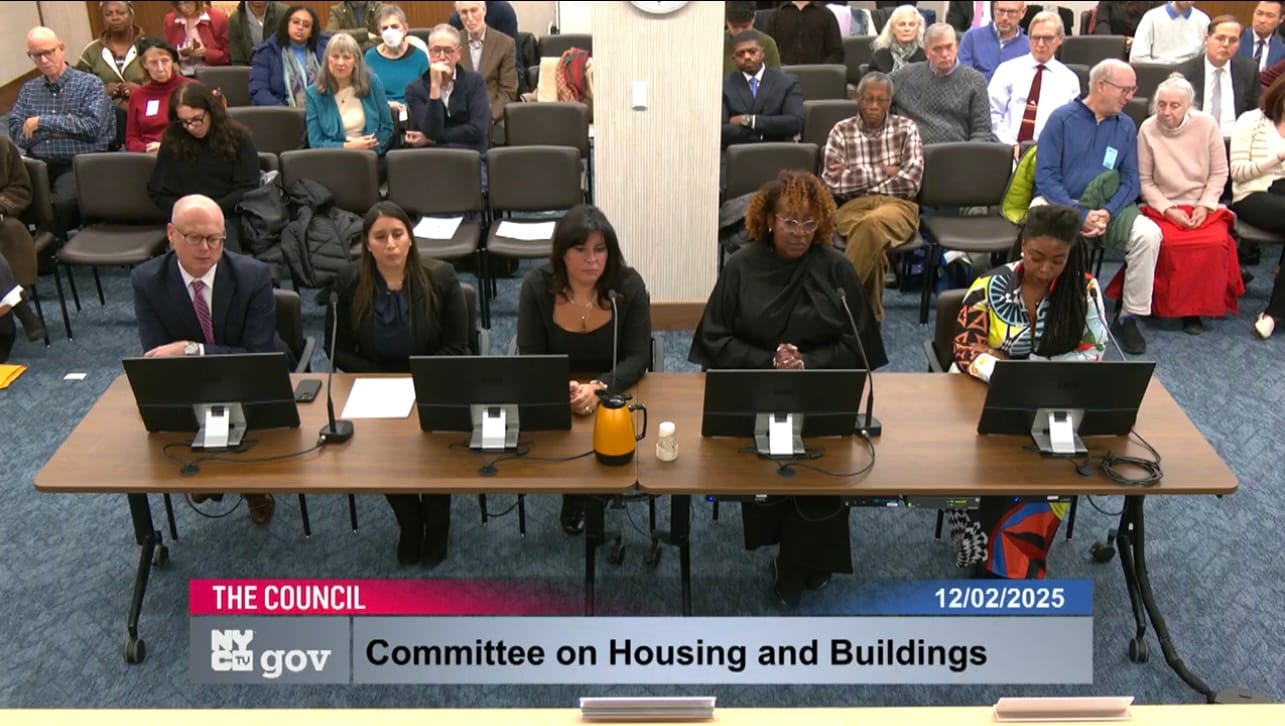
Later in the week, HGAR, NYSAR, and LIBOR had the opportunity to participate in a City Council hearing on a series of co-op transparency bills that have generated significant attention across the real estate community. Our presence at the hearing ensured that the interests of our members and the buyers and sellers they represent were firmly heard as the council evaluates potential changes to the cooperative purchase process.
From left, HGAR’s Jermaine Meadows, Federal Political Coordinator Christina Stevens and Congressman Adriano Espaillat.
One of the key pieces of legislation discussed was Intro 1120, sponsored by Councilmember Julie Farías, that would establish clear timelines for cooperative boards to process, review, and issue decisions on co-op purchase applications. As many of our members know firsthand, the lack of transparency and predictability in the co-op approval process has long been a challenge for buyers, sellers and agents alike. Intro 1120 addresses this issue directly by setting forth a reasonable and structured set of deadlines:
Cooperative boards must acknowledge receipt of an application within 10 days, or the application is deemed complete.
Boards must issue a decision approval or denial within 45 days of receiving the completed application.
If additional time is needed, a 14-day extension may be granted, provided the board notifies the applicant.
Importantly, if a board fails to issue a decision within the 45-day timeline plus any applicable extension, the application would be deemed approved. This provision introduces accountability into a process that has often lacked it and would help ensure that buyers and sellers can move forward with confidence rather than face indefinite delays.
We expressed our support for this legislation, emphasizing that transparency does not diminish a co-op board’s authority it simply ensures that decisions are made in a timely, fair and consistent manner.
We also voiced our support for Intro 407, which would require co-op corporations to provide prospective purchasers with a written explanation detailing the reasons for a rejection within five days of the decision. This measure represents another meaningful step toward fairness and accountability in the co-op marketplace. Standardized disclosures help eliminate ambiguity, reduce the potential for discriminatory decision-making, and give buyers and sellers clearer insight into the factors shaping outcomes.
NYSAR, LIBOR and HGAR officials testify at City Council Hearing.
Together, these bills represent a thoughtful and balanced approach to modernizing the cooperative housing system. They preserve the autonomy of co-op boards while protecting consumers from practices that can create uncertainty and financial hardship.
Our Government Affairs team will continue monitoring both pieces of legislation closely and engaging with elected officials throughout the process. We remain committed to ensuring that any reforms strengthen transparency, promote equity and support a healthy and functioning housing market.
As always, thank you to our members for your continued engagement and for staying informed on these crucial issues. Your involvement makes our advocacy stronger, and together, we will continue to push for policies that serve both our industry and the communities we represent.
About the author: Dr. Jermaine Meadows is the Director of Government Affairs for the Bronx and Manhattan for the Hudson Gateway Association of Realtors.
It is recommended that all real estate brokerage firms, including commercial brokerages, enter into detailed agreements with their buyer/tenant or seller/landlord clients.
As an industry, we must remain engaged in these discussions to ensure policies balance fiscal responsibility with a healthy and competitive real estate market.
Receive original business news about real estate and the REALTORS® who serve the lower Hudson Valley, delivered straight to your inbox. No credit card required.